Black Beauty’s earliest remembered years
The Meadow at Farmer Grey’s
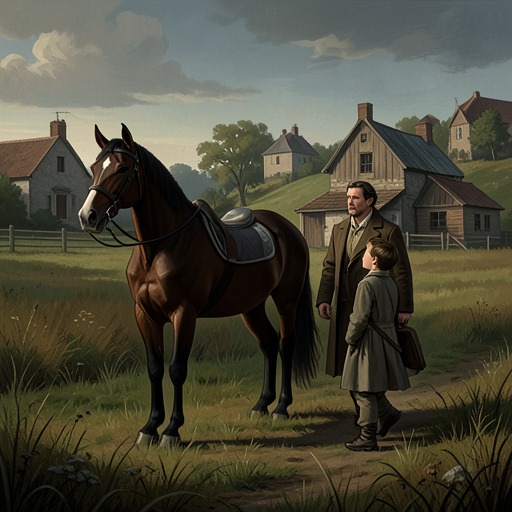
[Black Beauty](entity:character-recall-character-black-beauty-729f0cc3ed89) begins life in a pleasant meadow at [Farmer Grey’s farm](entity:location-recall-location-farmer-grey-s-farm-d9bc135d4b3f), living beside his mother, [Duchess](entity:character-recall-character-duchess-9f1c6566987c). He plays with the other colts and learns the rhythms of open fields, shelter, and kind care.
Duchess teaches him to be gentle, work willingly, and never bite or kick, even in play. Her counsel becomes an early measure by which he understands the treatment he later receives.
During Black Beauty’s early meadow years
Dick Drives the Colts
A farm boy named Dick torments the colts by throwing stones and sticks to make them run. The horses can usually escape, but some are struck and hurt.
Their master catches Dick at it and dismisses him from the farm. The episode establishes the humane standard of care that [Black Beauty](entity:character-recall-character-black-beauty-729f0cc3ed89) first knows, and the consequences imposed on a person who abuses animals.
Before Black Beauty turns two
The Hunt Accident
[Black Beauty](entity:character-recall-character-black-beauty-729f0cc3ed89) and the other horses watch hounds pursue a hare across the fields. The chase ends at a steep bank and stream: a young rider is killed, and [Rob Roy](entity:character-recall-character-rob-roy-5ceab0ed4793) breaks a leg.
The farrier has Rob Roy shot to end his suffering. Black Beauty later learns that the dead horse was his brother, and the tragedy leaves [Duchess](entity:character-recall-character-duchess-9f1c6566987c) grieving; she never again visits that part of the meadow. The hunt’s excitement is set against its needless cost to animals and people.
At four years old
Black Beauty’s Breaking-In
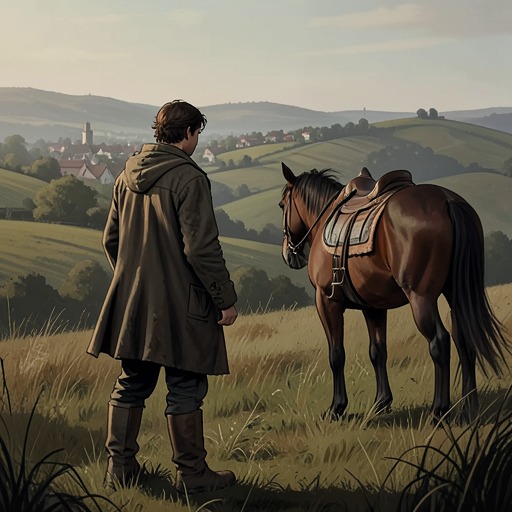
When [Squire Gordon](entity:character-recall-character-squire-gordon-b92b0e3a3205) chooses him, [Black Beauty](entity:character-recall-character-black-beauty-729f0cc3ed89) is broken in by his first master with patience and care. He gradually accepts the bridle, saddle, rider, harness, and iron shoes, learning what human work will require of him.
His training also includes time beside a railway, where he learns that passing trains cannot harm him. The experience prepares him to stay calm around unfamiliar sights and sounds, a confidence his careful upbringing helps preserve.
During Black Beauty’s breaking-in
Duchess’s Warning
Driving with his mother, [Black Beauty](entity:character-recall-character-black-beauty-729f0cc3ed89) hears [Duchess](entity:character-recall-character-duchess-9f1c6566987c) distinguish kind, thoughtful people from cruel or careless ones. She warns that a horse cannot choose who will eventually own or drive him, so he must do his best and keep his good name.
Her advice gives him a practical ethic for a life shaped by changing owners. It also recognizes that ignorance, not only deliberate cruelty, can make a horse suffer.
Soon after Black Beauty’s breaking-in
Arrival at Birtwick Park
[Black Beauty](entity:character-recall-character-black-beauty-729f0cc3ed89) leaves his first home for [Birtwick Park](entity:location-recall-location-birtwick-park-23bdf26ef738), where [Squire Gordon](entity:character-recall-character-squire-gordon-b92b0e3a3205)’s coachman, [John Manly](entity:character-recall-character-john-manly-d83ea87667b8), oversees his work. The stable is airy and comfortable, and Black Beauty meets [Merrylegs](entity:character-recall-character-merrylegs-883787f4252e) and the chestnut mare [Ginger](entity:character-recall-character-ginger-7a5f4669310e).
Ginger resents losing the loose box but explains that she has a habit of biting after years of rough treatment. Black Beauty arrives with trust in people; Ginger’s guarded manner shows how a horse’s behavior may reflect what people have done to her.
The day after his arrival at Birtwick Park
Black Beauty’s First Trial
[John Manly](entity:character-recall-character-john-manly-d83ea87667b8) tests [Black Beauty](entity:character-recall-character-black-beauty-729f0cc3ed89) on roads and open ground, finding him fast, steady, and responsive. The horse meets a decorated traveling cart and nearby gunfire without panic.
[Squire Gordon](entity:character-recall-character-squire-gordon-b92b0e3a3205) rides him the next day and approves. The family names him Black Beauty, recognizing the handsome, intelligent expression that accompanies his willing temperament.
In Black Beauty’s first weeks at Birtwick Park
Ginger and Black Beauty Become Partners
[Black Beauty](entity:character-recall-character-black-beauty-729f0cc3ed89) is harnessed with [Ginger](entity:character-recall-character-ginger-7a5f4669310e) and discovers that, despite her distrustful manner, she works honestly and courageously. Their matching pace and willingness make them a successful pair.
Ginger begins to soften in a stable where [John Manly](entity:character-recall-character-john-manly-d83ea87667b8), [James Howard](entity:character-recall-character-james-howard-64287d424266), and [Squire Gordon](entity:character-recall-character-squire-gordon-b92b0e3a3205) treat her with patience. [Merrylegs](entity:character-recall-character-merrylegs-883787f4252e) jokes that the stable’s imagined horse medicine is made of kindness, firmness, patience, and common sense.
During Black Beauty’s early life at Birtwick Park
Merrylegs Teaches the Boys
After carrying the Blomefield children patiently, [Merrylegs](entity:character-recall-character-merrylegs-883787f4252e) explains that he has thrown off the older boys when they kept whipping him and ignored his signals of fatigue. He insists that he was careful not to endanger the younger children entrusted to him.
His response is a controlled lesson rather than a kick, because he values the people who have treated him well and fears the harsh fate that a reputation for vice might bring. His story reinforces the book’s argument that kind treatment can create trust and good conduct.
During a Sunday conversation in the orchard
Sir Oliver Condemns Docking
In the orchard, [Sir Oliver](entity:character-recall-character-sir-oliver-47ee234177c8) tells [Black Beauty](entity:character-recall-character-black-beauty-729f0cc3ed89) and [Ginger](entity:character-recall-character-ginger-7a5f4669310e) that men once cut off his tail for fashion. The pain was severe, and the permanent loss leaves him unable to swish flies from his body.
He describes similar mutilations inflicted on dogs, including the cutting of puppies’ tails and ears. The animals debate fashion, blinkers, and the human habit of altering creatures for appearance instead of considering their needs.
During the same orchard discussion
A Case Against Blinkers
The horses discuss blinkers, which restrict a carriage horse’s view. Justice explains that people claim they prevent fright, but the animals argue that limited sight can make unfamiliar objects harder to understand and can conceal dangers.
[Sir Oliver](entity:character-recall-character-sir-oliver-47ee234177c8) recalls accidents that he believes might have been avoided if horses had been able to see clearly. [Merrylegs](entity:character-recall-character-merrylegs-883787f4252e) cools the argument by reminding the others that some people, including [John Manly](entity:character-recall-character-john-manly-d83ea87667b8), question the practice and that [Birtwick](entity:location-recall-location-7f20a459fd05) is a place where horses are treated well.
During Black Beauty’s time at Birtwick Park
Squire Gordon Rebukes a Cruel Driver
[Squire Gordon](entity:character-recall-character-squire-gordon-b92b0e3a3205) sees a builder named Sawyer wrench a pony’s head and lash it for turning toward the park gates. He confronts the man, arguing that force will not make the pony willing and that the animal’s turn may reflect memory and intelligence.
On another occasion he challenges [Captain](entity:character-recall-character-captain-217ef1ae2046) Langley’s use of check-reins, comparing a horse’s bound head to a soldier drilled with his head tied back. He argues that restraint diminishes power and makes recovery from a stumble more difficult.
Late autumn at Birtwick Park
The Storm and the Fallen Oak
On a stormy journey with [Squire Gordon](entity:character-recall-character-squire-gordon-b92b0e3a3205) and [John Manly](entity:character-recall-character-john-manly-d83ea87667b8), [Black Beauty](entity:character-recall-character-black-beauty-729f0cc3ed89) sees an oak fall across the road. The party turns back and reaches the wooden bridge after dark, where floodwater covers part of the crossing.
Black Beauty refuses to step onto it, even when urged and struck. The tollkeeper calls out that the bridge has broken in the middle, and the men realize that the horse’s instinct has stopped them from plunging into the river.
During Black Beauty’s time at Birtwick Park
The Pony and the Thorn Hedge
[Black Beauty](entity:character-recall-character-black-beauty-729f0cc3ed89) and [John Manly](entity:character-recall-character-john-manly-d83ea87667b8) see a boy whipping and beating a pony that refuses to jump a gate too high for it. The pony finally throws the boy into a thorn hedge and gallops home.
John Manly finds the boy’s father and reports what happened. [James Howard](entity:character-recall-character-james-howard-64287d424266) recalls that the boy had also tormented flies, and remembers a teacher’s lesson that cruelty is the devil’s own trade-mark; John adds that faith without kindness to people and animals is empty.
December, during Black Beauty’s time at Birtwick Park
James Howard’s New Opportunity
[Squire Gordon](entity:character-recall-character-squire-gordon-b92b0e3a3205) asks [John Manly](entity:character-recall-character-john-manly-d83ea87667b8) whether [James Howard](entity:character-recall-character-james-howard-64287d424266) is trustworthy, using the questions to discover John’s honest opinion of the young stable hand. He then offers James a chance to work at his brother-in-law’s estate and eventually advance to coachman.
John praises James’s careful handling of horses and supports the opportunity despite the difficulty of losing an assistant. James accepts, and Squire Gordon arranges extra driving practice for him before he leaves.
On the first night of a journey to visit friends
The Old Hostler’s Judgment
At an inn, a quick and experienced hostler cleans [Black Beauty](entity:character-recall-character-black-beauty-729f0cc3ed89) and [Ginger](entity:character-recall-character-ginger-7a5f4669310e) with a skill that impresses [James Howard](entity:character-recall-character-james-howard-64287d424266). The hostler says that a horse’s manner reveals the treatment it has received, especially when young.
He also recalls the fatal hunt that killed the young Gordon and [Rob Roy](entity:character-recall-character-rob-roy-5ceab0ed4793), judging the leap a poor risk. His experience supports the novel’s insistence that horses’ habits and temperaments are shaped by training and handling.
That night at the inn
James Rescues the Inn Horses
Smoke and fire fill the inn stable while [Black Beauty](entity:character-recall-character-black-beauty-729f0cc3ed89), [Ginger](entity:character-recall-character-ginger-7a5f4669310e), and the other horses panic in their stalls. A hostler tries unsuccessfully to drag them out, but the animals do not trust the unfamiliar danger and remain frozen.
[James Howard](entity:character-recall-character-james-howard-64287d424266) enters calmly, covers Black Beauty’s eyes with a scarf, and leads him outside before returning for Ginger. Black Beauty’s neigh gives Ginger the courage to follow; James brings her out as flames spread through the stable, though two horses are trapped and die.
Soon after James Howard leaves Birtwick Park
John Manly Explains His Kindness
With [James Howard](entity:character-recall-character-james-howard-64287d424266) preparing to leave, [John Manly](entity:character-recall-character-john-manly-d83ea87667b8) tells him how [Squire Gordon](entity:character-recall-character-squire-gordon-b92b0e3a3205) and the former coachman Norman helped him and his crippled sister after their parents died. Their support gave John work, training, and a way to care for his family.
John says that he will help the inexperienced [Joe Green](entity:character-recall-character-joe-green-c464a0b0903b) because he was once helped himself. His account makes mutual care a practical obligation, not a matter of looking after oneself alone.
A few days after James Howard’s departure
Black Beauty’s Ride for the Doctor
A stable bell wakes [Black Beauty](entity:character-recall-character-black-beauty-729f0cc3ed89), and [Squire Gordon](entity:character-recall-character-squire-gordon-b92b0e3a3205) sends [John Manly](entity:character-recall-character-john-manly-d83ea87667b8) to fetch Dr. White because the mistress is gravely ill. Black Beauty gallops through the night, carrying John to the doctor and then the doctor back to [Birtwick](entity:location-recall-location-7f20a459fd05).
The urgent journey helps save the mistress’s life, but Black Beauty returns exhausted and soaked. [Joe Green](entity:character-recall-character-joe-green-c464a0b0903b), still inexperienced, fails to cover him or give him warm water; Black Beauty becomes dangerously cold before John returns and nurses him.
During Black Beauty’s illness
John Manly on Ignorance
While [Black Beauty](entity:character-recall-character-black-beauty-729f0cc3ed89) is ill with lung inflammation, [John Manly](entity:character-recall-character-john-manly-d83ea87667b8) worries over the treatment [Joe Green](entity:character-recall-character-joe-green-c464a0b0903b) gave him. Tom Green urges John to comfort the boy, who is heartbroken and believes he may have caused Black Beauty’s death.
John finally recognizes that Joe acted without understanding rather than from malice. Yet he insists that ignorance can do grave harm, because good intentions do not undo the consequences of careless treatment.
After Black Beauty recovers
Joe Green Stops the Brickfield Beating
Sent on an errand, [Joe Green](entity:character-recall-character-joe-green-c464a0b0903b) finds a drunken carter flogging two horses trapped in mud beneath a heavy load. Joe tells him to stop and offers to help lighten the cart, but the man refuses and keeps beating the animals.
Joe rides to the brickmaker to report the abuse and agrees to testify. [John Manly](entity:character-recall-character-john-manly-d83ea87667b8) praises his decision to intervene, and Joe’s clear evidence helps bring the carter before the magistrates.
After Black Beauty has lived at Birtwick Park for three years
The Gordons Leave Birtwick
The mistress’s illness forces her to leave England for a warmer climate, and [Squire Gordon](entity:character-recall-character-squire-gordon-b92b0e3a3205) breaks up his household. [Merrylegs](entity:character-recall-character-merrylegs-883787f4252e) is given to the vicar with the promise that he will never be sold, while [Black Beauty](entity:character-recall-character-black-beauty-729f0cc3ed89) and [Ginger](entity:character-recall-character-ginger-7a5f4669310e) are sold to the [Earl of W——](entity:character-recall-character-earl-of-w-339ae7b123f6), whom Squire Gordon hopes will treat them well.
[John Manly](entity:character-recall-character-john-manly-d83ea87667b8) decides to seek work as a colt-breaker so he can give young horses a fair start. Black Beauty leaves the place where he has known kindness and friendship, with no certainty about what waits at [Earlshall Park](entity:location-recall-location-earlshall-park-06e7bbac5658).
The morning after the Gordons’ departure
John Manly’s Farewell
[John Manly](entity:character-recall-character-john-manly-d83ea87667b8) takes [Black Beauty](entity:character-recall-character-black-beauty-729f0cc3ed89) and [Ginger](entity:character-recall-character-ginger-7a5f4669310e) across the country to [Earlshall Park](entity:location-recall-location-earlshall-park-06e7bbac5658). Before leaving, he explains their temperaments to [York](entity:character-recall-character-york-d7bc586b3dff): Black Beauty is trusting, while Ginger may defend herself if treated unfairly.
John also warns that neither horse has worn a check-rein at [Birtwick](entity:location-recall-location-7f20a459fd05). York replies that the lady of the house insists on style and will require their heads to be held high, foreshadowing the hardship that awaits them.
The first weeks at Earlshall Park
The Check-Rein Tightens
The [Earl of W——](entity:character-recall-character-earl-of-w-339ae7b123f6) initially tells [York](entity:character-recall-character-york-d7bc586b3dff) to use a check-rein gently, but his wife dislikes the horses’ natural head carriage. She orders York to raise their heads, and he shortens the reins by degrees.
The restraint makes it difficult for [Black Beauty](entity:character-recall-character-black-beauty-729f0cc3ed89) to lean forward and pull on hills, placing strain on his back and legs. [Ginger](entity:character-recall-character-ginger-7a5f4669310e) recognizes the danger and warns that she will not endure a much tighter rein.
After the check-rein has been repeatedly shortened
Ginger’s Rebellion at Earlshall
When the Earl’s wife demands that the horses’ heads be raised further, [York](entity:character-recall-character-york-d7bc586b3dff) tightens [Black Beauty](entity:character-recall-character-black-beauty-729f0cc3ed89)’s rein almost unbearably. As York tries to shorten [Ginger](entity:character-recall-character-ginger-7a5f4669310e)’s, she rears, plunges, and kicks over the carriage pole, bruising Black Beauty before falling.
York frees Black Beauty and lets down his head, privately admitting that he expected trouble from the check-reins. Ginger is removed from carriage work, but the practice continues for Black Beauty, who is given a new partner accustomed to the restraint.
During Black Beauty’s months in the Earl’s carriage
Max Explains the Trade
[Black Beauty](entity:character-recall-character-black-beauty-729f0cc3ed89) suffers under the tight rein, which causes frothing, pressure on his windpipe, and pain in his neck, chest, mouth, and tongue. Max, his new partner, says that he too endures it because he must and believes it shortens horses’ lives.
Max recalls a dealer explaining that horses are trained to carry their heads high because buyers demand the look, despite the harm. The practice becomes a profitable cycle: horses wear out and are replaced, while the fashion is mistaken for good horsemanship.
Early spring at Earlshall Park
Lady Anne Chooses Black Beauty
When part of the household goes to [London](entity:location-recall-location-london-420923d4a60a), [Lady Anne](entity:character-recall-character-lady-anne-ec37779b28f0) chooses [Black Beauty](entity:character-recall-character-black-beauty-729f0cc3ed89) for riding and calls him Black Auster. She is a capable horsewoman, and their rides give him welcome relief from carriage work.
Lady Anne later swaps mounts with [Colonel Blantyre](entity:character-recall-character-colonel-blantyre-ab262f1c54ae), taking the nervous mare Lizzie while he rides Black Beauty. Despite Colonel Blantyre’s warning, she sets out with Lizzie, whose fright will soon turn the ride into an emergency.
During the spring at Earlshall Park
Lady Anne’s Runaway Ride
While [Lady Anne](entity:character-recall-character-lady-anne-ec37779b28f0) waits outside a doctor’s house, a colt and a cracking whip startle Lizzie into a runaway gallop. [Colonel Blantyre](entity:character-recall-character-colonel-blantyre-ab262f1c54ae) races after them on [Black Beauty](entity:character-recall-character-black-beauty-729f0cc3ed89), following directions from people along the road and guiding the horse across rough common land.
Lizzie stumbles after jumping a ditch, throwing Lady Anne, who lies unconscious. Colonel Blantyre sends a local man for the doctor and help; the injured rider survives, and Black Beauty’s speed and steadiness help bring assistance quickly.
Early April, before the Earl’s family returns
Reuben Smith’s Fatal Ride
[Reuben Smith](entity:character-recall-character-reuben-smith-171a524a22c0) rides [Black Beauty](entity:character-recall-character-black-beauty-729f0cc3ed89) to the station with [Colonel Blantyre](entity:character-recall-character-colonel-blantyre-ab262f1c54ae), but delays his return after meeting friends. When he finally leaves the inn late and drunk, he ignores a loose shoe and drives Black Beauty at speed over rough roads.
The shoe comes off, and sharp stones injure Black Beauty’s hoof until he falls and throws Smith. Smith dies before help arrives; Black Beauty remains beside him, badly hurt in his foot and knees. An inquest clears the horse of blame, while Smith’s widow and children lose their home.
After Black Beauty’s recovery from the fall
Black Beauty and Ginger Are Ruined
[Black Beauty](entity:character-recall-character-black-beauty-729f0cc3ed89) spends months healing his injured knees in a lonely meadow. [Ginger](entity:character-recall-character-ginger-7a5f4669310e) is brought to keep him company, but she has been ruined by hard riding: Lord George pushed her into a race despite warnings that she was strained, damaging her wind and back.
The [Earl of W——](entity:character-recall-character-earl-of-w-339ae7b123f6) concludes that neither horse can return to his stable. He allows Ginger another long rest but sells Black Beauty because his knees are blemished. The friends part without a proper farewell, calling to each other across the hedge as Black Beauty is led away.
After leaving Earlshall Park
Black Beauty Becomes a Job Horse
A livery-stable owner buys [Black Beauty](entity:character-recall-character-black-beauty-729f0cc3ed89) on [York](entity:character-recall-character-york-d7bc586b3dff)’s recommendation and takes him by train to a new home. The stable is less airy than [Birtwick](entity:location-recall-location-7f20a459fd05), and the stalls slope so that standing is tiring, though the horse is fed and cared for reasonably.
As a job horse, Black Beauty is hired out to many drivers, some gentle and practiced, others ignorant or careless. He learns that bad driving can be as punishing as deliberate cruelty, even when a driver believes that paying for a horse gives him the right to use it without limit.
During Black Beauty’s early months as a job horse
The Stone in Black Beauty’s Shoe
A careless driver talks with his passengers while [Black Beauty](entity:character-recall-character-black-beauty-729f0cc3ed89) picks up a sharp stone in his shoe. The horse grows lame, but the driver accuses him of laziness and whips him onward instead of checking his foot.
A passing farmer recognizes the signs, removes the stone, and tells the driver to go gently because the foot is bruised. The incident contrasts attentive horsemanship with the indifference of someone who treats a hired horse as another piece of equipment.
During Black Beauty’s job-horse years
The Cockneys’ Hard Driving
[Black Beauty](entity:character-recall-character-black-beauty-729f0cc3ed89) describes drivers who treat horses like steam engines, keeping up an unrelenting pace and refusing to walk up hills. Some forget to use or release the brake, while others start too fast, stop abruptly, and turn carelessly through traffic.
A collision at a sharp corner leaves his companion Rory badly wounded when an oncoming gig’s shaft strikes his chest. Rory eventually recovers enough for work but is sold for coal-carting, where the steep hills and heavy loads promise further hardship.
During Black Beauty’s job-horse years
Peggy’s Lost Trot
[Black Beauty](entity:character-recall-character-black-beauty-729f0cc3ed89) is paired with [Peggy](entity:character-recall-character-peggy-68a825115f0d), whose short legs make it difficult to match the pace demanded by impatient drivers. Whipping forces her into an awkward shuffle that she once did not have.
Peggy recounts how her first kind owner let her keep a comfortable trot, but a farmer’s insistence on speed changed her gait. She is eventually bought by two ladies who need a safe horse and allow her to travel at a steady pace, giving her a more suitable life.
During Black Beauty’s job-horse years
The Shying Horse’s Explanation
A young horse with a reputation for shying tells [Black Beauty](entity:character-recall-character-black-beauty-729f0cc3ed89) that he was frightened as a foal and repeatedly whipped whenever he tried to look at unfamiliar objects. The punishment made him more fearful rather than teaching him what was safe.
An older rider once tells his master that a frightened horse should not be whipped for shying. The account echoes Black Beauty’s own understanding that calm exposure and patient guidance are more effective than force.
Toward the end of Black Beauty’s time as a job horse
A Better Kind of Driver
A gentleman asks that the curb be removed from [Black Beauty](entity:character-recall-character-black-beauty-729f0cc3ed89)’s bridle, explaining that a good mouth should not be needlessly restrained. He drives with a light hand and a quiet touch, bringing back memories of the considerate handling Black Beauty knew at [Birtwick](entity:location-recall-location-7f20a459fd05).
The man takes a liking to him and persuades his friend to buy him for riding. Black Beauty is sold to [Mr. Barry](entity:character-recall-character-mr-barry-57ca53ea04a2), whose care initially promises a quiet and comfortable place.
During Black Beauty’s first months with Mr. Barry
Filcher Steals the Oats
[Mr. Barry](entity:character-recall-character-mr-barry-57ca53ea04a2) orders abundant feed for [Black Beauty](entity:character-recall-character-black-beauty-729f0cc3ed89), but the horse grows weak as his oats steadily disappear. A visiting farmer notices the change and suspects that the groom is not giving the horse his full ration.
A policeman catches Filcher’s young son carrying stolen oats from the stable and searches the corn bin. Filcher is arrested and sentenced to prison; the boy is not treated as the guilty party. The theft makes clear that neglect can be hidden from an owner by a groom’s deceit.
After Filcher is dismissed
Alfred Smirk Neglects Black Beauty
Alfred Smirk replaces Filcher and performs civility when [Mr. Barry](entity:character-recall-character-mr-barry-57ca53ea04a2) is watching, but neglects the work that keeps a horse healthy. He leaves wet, filthy bedding in [Black Beauty](entity:character-recall-character-black-beauty-729f0cc3ed89)’s box, fails to exercise him, and pays little attention to his feet.
Black Beauty develops thrush and tender hooves. A farrier identifies the filthy stable as the cause, prescribes cleaner bedding, less corn, bran mashes, and green food, and restores the horse’s health. Disgusted by repeated deception, Mr. Barry gives up keeping a horse and sells Black Beauty.
After Mr. Barry decides to give up keeping a horse
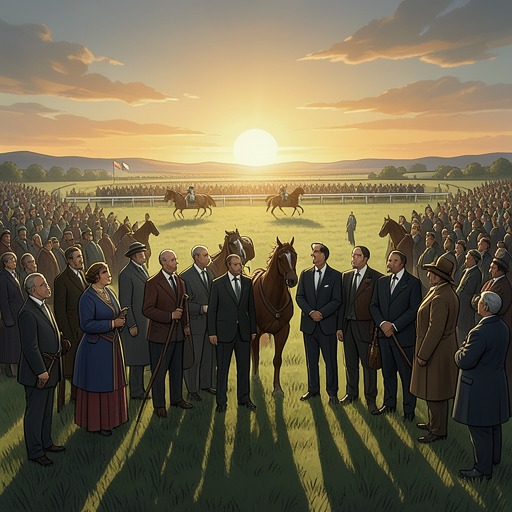
The Horse Fair
At a horse fair, [Black Beauty](entity:character-recall-character-black-beauty-729f0cc3ed89) sees young animals, handsome horses, and exhausted old ones with injuries and signs of hard labor. Buyers inspect him closely but hesitate because his knees are blemished.
A kind, experienced man offers more than a hard-faced buyer and wins the bargain. He feeds Black Beauty and rides him to [London](entity:location-recall-location-london-420923d4a60a), where he brings the horse to his family and gives him the name Jack.
Soon after the horse fair
Black Beauty Joins the Barkers
[Black Beauty](entity:character-recall-character-black-beauty-729f0cc3ed89), now called Jack, enters the home of [Jerry Barker](entity:character-recall-character-jerry-barker-7cbba3c065cf), [Polly Barker](entity:character-recall-character-polly-barker-16eedc531d6d), [Harry Barker](entity:character-recall-character-harry-barker-8d6be5cb130b), and [Dolly Barker](entity:character-recall-character-dolly-barker-d537985c4e42). Jerry checks that the harness fits, gives him a plain snaffle rather than a curb or check-rein, and treats him as a trusted working partner.
The stable is kept clean, the horses receive adequate food and water, and movable bars let them turn around while resting. Black Beauty is anxious at first about [London](entity:location-recall-location-london-420923d4a60a) traffic, but learns to trust Jerry’s steady driving.
During Black Beauty’s first Sundays with Jerry
Captain’s War Story
[Black Beauty](entity:character-recall-character-black-beauty-729f0cc3ed89)’s stable companion [Captain](entity:character-recall-character-captain-217ef1ae2046) tells him that he served in the [British Army](entity:organization-recall-organization-british-army-26b1d8de3be5) during the [Crimean War](entity:event-recall-event-crimean-war-b4f419916143). He recalls the dangerous sea voyage, the hardship of campaigning, and the confidence he felt in his cavalry master.
In a final charge, Captain’s rider is struck and falls, leaving the horse alone amid the battle. Captain is forced onward with another soldier and sees the battlefield afterward, where many wounded horses are shot. He returns to England but never sees his beloved first master again.
One morning during Black Beauty’s cab work
Jerry Refuses a Sunday Fare
A customer asks [Jerry Barker](entity:character-recall-character-jerry-barker-7cbba3c065cf) to take his wife to church on Sundays. Jerry refuses because he holds only a six-day cab license and believes that a weekly day of rest is necessary for both people and horses.
The customer takes his business elsewhere, and Jerry’s friends debate whether [Sunday rest](entity:concept-recall-concept-sunday-rest-7eb1bf9b9dc2) can be defended when work is scarce. Jerry argues that drivers would protect the day if they acted together, and that people seeking church can find another way to travel.
Several weeks after Jerry refuses Sunday work
Dinah Brown’s Sunday Journey
[Polly Barker](entity:character-recall-character-polly-barker-16eedc531d6d) asks Jerry to drive Dinah Brown to the country so she can see her dangerously ill mother. Jerry hesitates because the horses and he are tired, but Polly appeals to their duty to treat others as they would wish to be treated.
Jerry borrows a light trap and takes [Black Beauty](entity:character-recall-character-black-beauty-729f0cc3ed89) on the journey. The horse spends the waiting hours in a meadow while Jerry rests nearby, and the work becomes a compassionate exception to Jerry’s usual observance of [Sunday rest](entity:concept-recall-concept-sunday-rest-7eb1bf9b9dc2).
During a cold London winter
Dolly Meets a Real Gentleman
A well-dressed passenger sees Jerry eating soup while [Dolly Barker](entity:character-recall-character-dolly-barker-d537985c4e42) waits beside him in the street. Rather than hurry him, the man waits patiently and helps Dolly cross safely.
Jerry tells his daughter that a real gentleman has time and thought for the comfort of a cabman and a child. The passenger later intervenes when he sees a carter beating his horses, arguing that people who witness cruelty have a duty to act.
During Black Beauty’s London years
Seedy Sam Describes the Cab Trade
[Seedy Sam](entity:character-recall-character-seedy-sam-f95b15a15128) arrives at the cab stand with a badly exhausted horse. When [Governor Grant](entity:character-recall-character-governor-grant-a6535b4b6a88) rebukes him, Sam describes the economics that keep drivers working long hours: high daily cab and horse charges, low fares, heavy expenses, and no guaranteed rest.
Sam argues that drivers are driven to overwork horses because they must earn enough to pay their masters and feed their families. Governor Grant acknowledges the pressure but urges him to speak kindly to the animal; the scene shows exploitation passing from owners through drivers to horses.
A few mornings after the cab-stand dispute
Seedy Sam Dies
A substitute driver reports that [Seedy Sam](entity:character-recall-character-seedy-sam-f95b15a15128) has fallen ill and cannot work. The following day he says Sam is dead, after spending his final hours raving about his employer and the Sundays he never had.
[Governor Grant](entity:character-recall-character-governor-grant-a6535b4b6a88) calls the death a warning to the men on the stand. Sam’s story makes the human cost of the cab system inseparable from the exhaustion inflicted on its horses.
During the London years, after Ginger’s repeated resale
Black Beauty Finds Ginger
At a cab stand, [Black Beauty](entity:character-recall-character-black-beauty-729f0cc3ed89) recognizes a shabby, worn chestnut horse as [Ginger](entity:character-recall-character-ginger-7a5f4669310e). She explains that after her brief recovery at [Earlshall](entity:location-recall-location-8f48fd31d013), hard riding repeatedly brought back her injuries, and she was sold from one owner to another.
Her current owner uses her in low cab work despite her weakness, expecting to extract the cost of hiring her. Ginger says that resistance is useless when people are stronger and indifferent; Black Beauty is left with no comfort to offer his old friend.
A short time after Black Beauty meets her
Ginger’s Death
A cart carrying a dead horse passes the cab stand. [Black Beauty](entity:character-recall-character-black-beauty-729f0cc3ed89) sees a thin chestnut neck and a white streak on the forehead and believes the body may be [Ginger](entity:character-recall-character-ginger-7a5f4669310e)’s.
He hopes that death has ended her suffering, though he cannot know for certain that the horse is his friend. The image turns her earlier wish to die at work into a bleak indictment of the treatment that exhausted her.
During Black Beauty’s London cab work
The Butcher’s Overworked Horse
[Black Beauty](entity:character-recall-character-black-beauty-729f0cc3ed89) witnesses a butcher’s horse return exhausted and trembling after being driven too hard. The butcher rebukes his own son, who says customers’ last-minute demands force him to hurry meat deliveries.
The father admits that customers’ poor planning creates pressure for both the shop and its horse. Other memories of a cheerful coster-boy’s pony and an old coalman’s horse show that hard work can still be bearable when a driver is kind and attentive.
On the eve of an election
Jerry Rejects Election Work
A candidate asks Jerry to hire out his cab for election work. Jerry refuses to cover it in campaign bills or make [Black Beauty](entity:character-recall-character-black-beauty-729f0cc3ed89) and [Captain](entity:character-recall-character-captain-217ef1ae2046) race between public houses carrying half-drunk voters.
When election supporters insult [Dolly Barker](entity:character-recall-character-dolly-barker-d537985c4e42) and Harry retaliates, Jerry tells his son that political colors do not guarantee liberty or virtue. He insists that voting should be guided by conscience rather than partisan bullying.
On election day
Jerry Takes a Child to Hospital
During the crush of election traffic, a country woman asks Jerry for directions to St Thomas’ Hospital. She carries her sick young son and cannot afford a cab, so Jerry offers to take them for free rather than let them struggle through crowded streets.
Two men try to seize the cab, but Jerry tricks them into leaving and then carries the mother and child safely to the hospital. He quietly recalls the teaching about helping the least among them, and a former employer later rewards his kindness with a fare.
During Black Beauty’s later years with Jerry
Captain’s Collision
Returning from [London Bridge](entity:location-recall-location-22918c927012), Jerry and [Captain](entity:character-recall-character-captain-217ef1ae2046) encounter a brewer’s dray driven wildly by a drunken man. The dray crashes into their cab, kills a young girl, tears off the wheels, and badly injures Captain.
The driver is fined and the brewer pays damages, but Captain’s injury leaves him unable to continue cab work. Jerry rejects the idea that money can compensate for losing a trusted old companion and condemns drink for causing innocent people and animals to suffer.
After Captain’s collision
Jerry Gives Up Drinking
[Governor Grant](entity:character-recall-character-governor-grant-a6535b4b6a88) admits that he has struggled with drink and tried unsuccessfully to stop. [Jerry Barker](entity:character-recall-character-jerry-barker-7cbba3c065cf) tells him how he overcame his own dependence with Polly’s help, good food, coffee, reading, and a firm resolve not to lose his family or himself.
Jerry has abstained for ten years and urges the governor to try again, explaining that the craving had once made him feel he was not his own master. Grant considers following his example, and Jerry’s story offers a rare account of recovery amid the novel’s many warnings about alcohol.
Soon after the collision
Captain’s Final Retirement
Although [Captain](entity:character-recall-character-captain-217ef1ae2046) initially seems to recover, age and his injuries make a return to cab work impossible. A farrier believes he could be sold for carting, but Jerry refuses to send a faithful old horse into likely hardship.
Jerry decides that the kindest course is to have Captain put down rather than sell him into misery. The family grieves when Captain is gone, while Jerry seeks a replacement horse for the cab.
After Captain’s retirement
Hotspur Joins the Cab
Jerry obtains [Hotspur](entity:character-recall-character-hotspur-c63d5e610f8d), a young horse dismissed from a noble stable after a runaway accident. His former handlers had clipped him, given him too little exercise, and restrained him with a sharp curb, martingale, and tight check-rein.
Jerry believes that bad equipment and accumulated energy helped provoke the accident. With an easy bit, steady work, and a free head, Hotspur settles into cab life and discovers that the work is less miserable than being bound by fashionable tack.
New Year
The New Year’s Night Wait
During the busy holiday season, Jerry and [Black Beauty](entity:character-recall-character-black-beauty-729f0cc3ed89) are left waiting outside a party long after the appointed time. The cold, driving sleet chills the horse, while Jerry’s cough worsens as he tries to shelter himself beside the cab.
The passengers finally emerge after midnight and complain about the charge for their long delay. Jerry takes no more than he is owed, but arrives home so ill that he can barely speak; his last night’s work marks the beginning of the end of his cab-driving life.
The days after New Year
Jerry Leaves Cab Work
Jerry develops severe bronchitis and is warned that he must never return to cab work if he wants to live. [Governor Grant](entity:character-recall-character-governor-grant-a6535b4b6a88) takes [Hotspur](entity:character-recall-character-hotspur-c63d5e610f8d) out to earn money while Jerry recovers, sharing the proceeds with the family so that the horses can be fed.
A letter from Mrs. Fowler offers the Barkers a cottage near [Fairstowe](entity:location-recall-location-b5d3979ebb56) and a future place for Jerry as a coachman. The family prepares to leave [London](entity:location-recall-location-london-420923d4a60a); Jerry is too ill to say farewell, and Polly and the children bid [Black Beauty](entity:character-recall-character-black-beauty-729f0cc3ed89) goodbye before he is sold to a corn dealer.
After Jerry and his family leave London
Black Beauty Meets Jakes
A corn dealer and baker buys [Black Beauty](entity:character-recall-character-black-beauty-729f0cc3ed89) and gives him plenty of food, but a hurried foreman repeatedly adds excessive weight to his loads. Jakes, the carter, recognizes that the loads are too heavy but cannot overrule the foreman.
A check-rein makes it harder for Black Beauty to pull, and repeated whipping on a steep hill compounds the strain. His declining strength shows that good feed cannot compensate for overloading and poor working conditions.
During Black Beauty’s months with the corn dealer
A Lady Frees Black Beauty’s Head
As [Black Beauty](entity:character-recall-character-black-beauty-729f0cc3ed89) struggles up a steep hill with an overloaded cart, a passing lady asks Jakes to stop whipping him. She explains that the check-rein prevents the horse from using his full strength and persuades Jakes to release it.
With his head free, Black Beauty leans into the collar and hauls the load steadily uphill. The lady urges Jakes to choose a good custom over a bad fashion, and he lets the rein out on later hills, though the heavy loads continue until a younger horse replaces Black Beauty.
Late in Black Beauty’s time with the corn dealer
The Dark Stable
The corn dealer’s stable has only a small window, leaving the stalls almost dark. The poor light weakens [Black Beauty](entity:character-recall-character-black-beauty-729f0cc3ed89)’s sight and makes the sudden transition into daylight painful; he stumbles over the threshold more than once.
He fears that a longer stay could have left him nearly blind. Before that happens, the dealer sells him to a large cab owner, beginning the harshest stage of his working life.
After leaving the corn dealer
Black Beauty Enters Skinner’s Stable
[Black Beauty](entity:character-recall-character-black-beauty-729f0cc3ed89) is bought by [Nicholas Skinner](entity:character-recall-character-nicholas-skinner-07d85012fa00), whose stable rents horses and cabs to drivers. There is no [Sunday rest](entity:concept-recall-concept-sunday-rest-7eb1bf9b9dc2), and both Skinner and the drivers press the horses hard to make money.
Black Beauty is driven on exhausting journeys, sometimes with heavy loads and no proper breaks. His driver uses a cruel whip, striking him under the belly and even at the head; the horse keeps trying, but feels his strength and hope ebb away.
After a long working day in the summer
Black Beauty Collapses on Ludgate Hill
After a full day without food or rest, [Black Beauty](entity:character-recall-character-black-beauty-729f0cc3ed89) is hired to carry a family and a great deal of luggage. A young passenger named Grace recognizes his weakness and begs her father to take another cab, but the adults ignore her and load him further.
On Ludgate Hill, exhaustion and the heavy load bring Black Beauty down in the street. He lies unable to move while people unload the cab and try to revive him; after receiving care, warm gruel, and rest, he is led back to Skinner’s stable.
About ten days after the collapse
Skinner Sends Black Beauty to Sale
A farrier tells [Nicholas Skinner](entity:character-recall-character-nicholas-skinner-07d85012fa00) that [Black Beauty](entity:character-recall-character-black-beauty-729f0cc3ed89) has been exhausted by overwork and needs months of rest before he can work again. Skinner has no meadow for recovery and would rather sell him cheaply than keep a sick horse.
At the farrier’s suggestion, Skinner gives Black Beauty ten days of rest and nourishing food before taking him to a sale. The horse improves enough to stand and move more easily, though his future remains uncertain.
At a horse sale after Black Beauty’s brief rest
Thoroughgood Buys Black Beauty
At the sale, [Black Beauty](entity:character-recall-character-black-beauty-729f0cc3ed89) sees other worn-out horses and fears that he may be bought for the same hard labor. [Mr. Thoroughgood](entity:character-recall-character-mr-thoroughgood-b28f059f9340) notices his breeding and condition, while his grandson [Willie](entity:character-recall-character-willie-1d5eb2624519) urges him to look beyond the horse’s thin appearance and buy him a chance to recover.
Mr. Thoroughgood pays five pounds and takes Black Beauty home. He gives him a meadow, shelter, good food, and gentle exercise, placing Willie in charge of his care.
Over the winter after the sale
Black Beauty Regains His Strength
Under [Mr. Thoroughgood](entity:character-recall-character-mr-thoroughgood-b28f059f9340)’s care, [Black Beauty](entity:character-recall-character-black-beauty-729f0cc3ed89) rests on soft ground, receives good food, and gradually regains his condition. [Willie](entity:character-recall-character-willie-1d5eb2624519) visits daily with treats and companionship, while Mr. Thoroughgood keeps a close watch on the horse’s injured legs.
By spring, Black Beauty is strong enough for a gentle drive. Mr. Thoroughgood finds that his mouth and paces remain excellent and believes he can still serve in a quiet, respectable home.
The summer after his recovery
Black Beauty Reunites with Joe Green
[Mr. Thoroughgood](entity:character-recall-character-mr-thoroughgood-b28f059f9340) presents [Black Beauty](entity:character-recall-character-black-beauty-729f0cc3ed89) to three ladies who are considering a horse for their carriage. Their young groom, [Joe Green](entity:character-recall-character-joe-green-c464a0b0903b), recognizes him by his white star, one white foot, and the small patch of pale hair [John Manly](entity:character-recall-character-john-manly-d83ea87667b8) once called Beauty’s three-penny bit.
Joe is delighted to discover that the horse is Black Beauty, whom he once nearly harmed through ignorance. He now works as a capable young groom and promises to give Black Beauty good care; [Miss Ellen](entity:character-recall-character-miss-ellen-b9d3f31764b9) tries him and is pleased with his manner.
By the end of the summer, near the novel’s close
Black Beauty’s Last Home
After a successful trial, the ladies decide to keep [Black Beauty](entity:character-recall-character-black-beauty-729f0cc3ed89) and restore his old name. [Miss Ellen](entity:character-recall-character-miss-ellen-b9d3f31764b9) writes to Mrs. Gordon to tell her that the horse she once loved has been found again.
Black Beauty lives comfortably with the family, cared for by [Joe Green](entity:character-recall-character-joe-green-c464a0b0903b) and befriended by [Willie](entity:character-recall-character-willie-1d5eb2624519). His work is easy, and the promise that he will never be sold ends his long succession of owners and hardships; he often dreams of the orchard at [Birtwick](entity:location-recall-location-7f20a459fd05).